15% Discount on all Crypto Currency Orders use coupon " Crypto 10 " or more Use code TAKE10 for 10% off all first orders

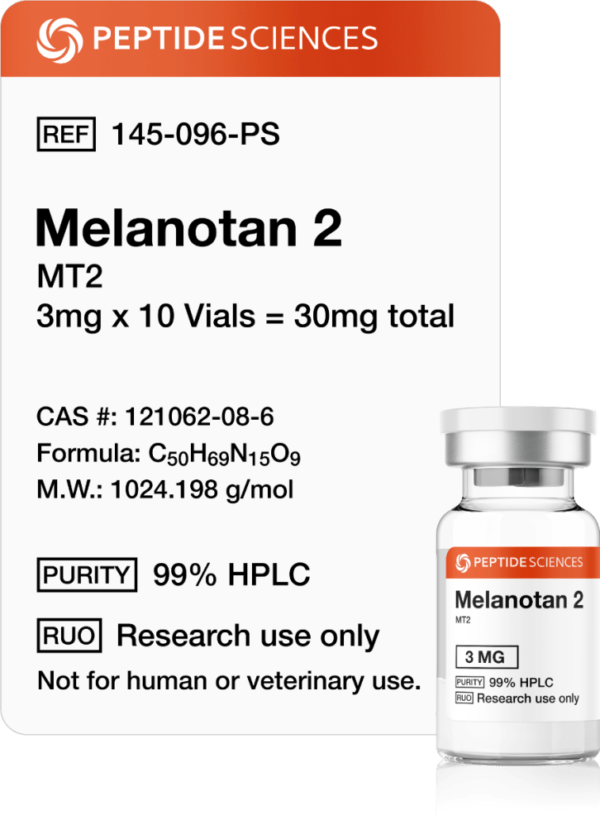
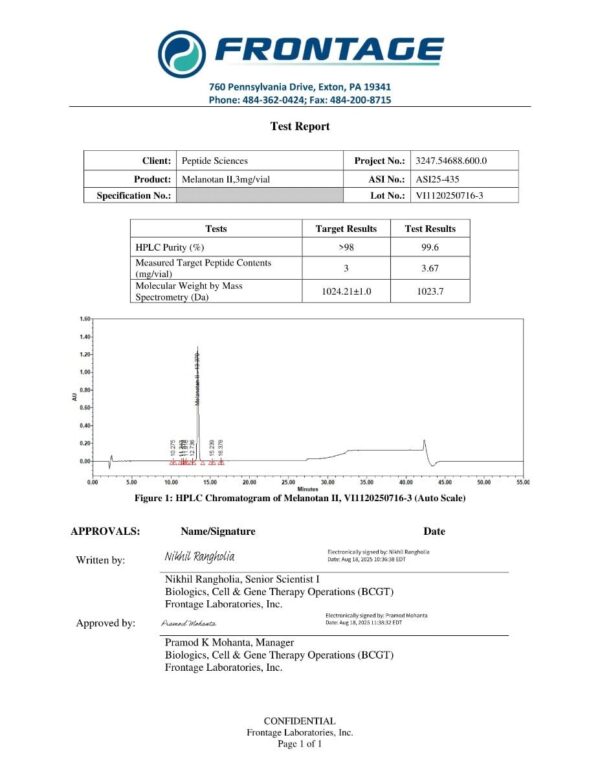
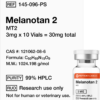
Melanotan 2 (MT2) (3mg x 10 Vials = 30mg)
Original price was: $140.00.$120.00Current price is: $120.00.
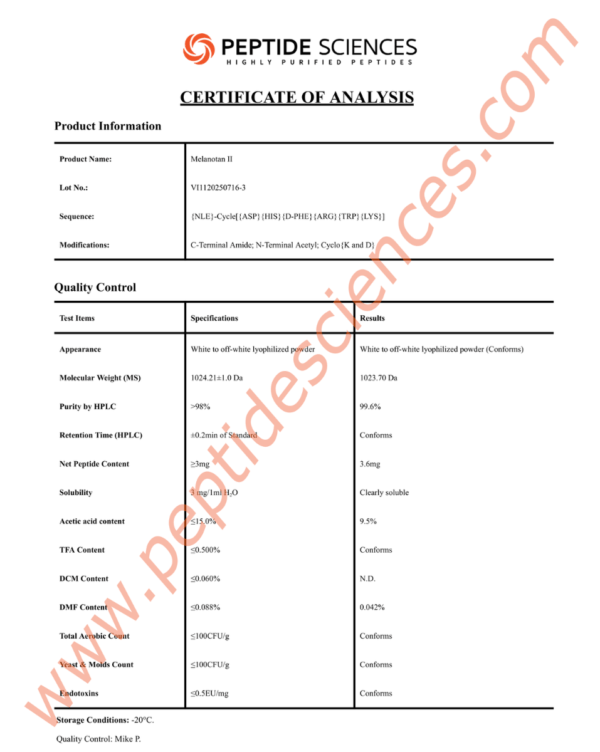
Melanotan-2 (MT-2) is a synthetic cyclic heptapeptide (Ac-Nle-c[Asp-His-D-Phe-Arg-Trp-Lys]-NH₂) that acts as a potent nonselective melanocortin receptor agonist. It is used in receptor binding and signal transduction research to investigate MC1R–MC5R pathways related to pigmentation, energy balance, and neuroendocrine signaling. MT-II provides a model for studying GPCR-mediated cAMP activation and receptor desensitization.
Melanotan 2 (MT2) (3mg x 10 Vials = 30mg) is a premium research compound widely utilized in various scientific studies.
Researchers seeking to buy Melanotan 2 (MT2) (3mg x 10 Vials = 30mg) online often prioritize purity and consistency.
This compound has been studied extensively for its unique biochemical properties and its role in cellular pathways.
Melanotan 2 (MT2): Overview
Melanotan 2 (MT-2) is a synthetic cyclic heptapeptide structurally derived from the endogenous melanocortin peptide α-melanocyte-stimulating hormone (α-MSH). It is employed in laboratory research as a non-selective agonist of melanocortin receptors and serves as a molecular tool for investigating melanocortin signaling pathways in cellular and in-vivo experimental systems.
Preclinical research utilizes MT-2 to interrogate receptor-mediated signal transduction, neuropeptide-driven transcriptional programs, and downstream second-messenger cascades associated with melanocortin receptor activation in controlled experimental models.
Melanotan 2 (MT2): Biochemical Characteristics
Peptide Sequence: Nle-Asp-His-D-Phe-Arg-Trp-Lys
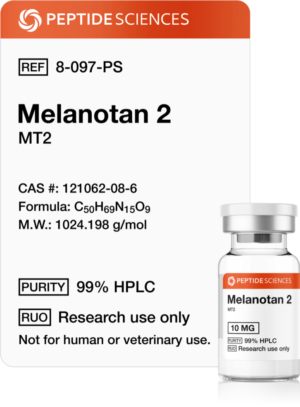
Molecular Formula: C50H69N15O9
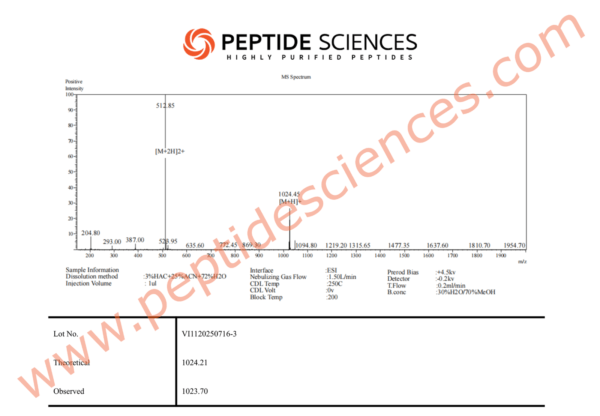
Molecular Weight: 1024.198 g/mol
PubChem CID: 92432
CAS Number: 121062-08-6
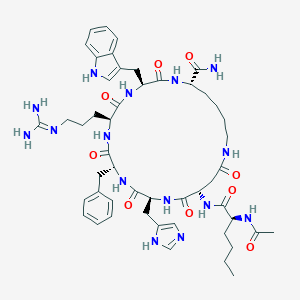
Source: PubChem
Melanotan 2 (MT2): Research Applications
MT-2 is used in research environments to study melanocortin receptor activation across multiple tissue types and neural circuits. Experimental applications include investigation of receptor-specific signaling bias, ligand–receptor affinity profiles, and downstream transcriptional responses mediated by melanocortin receptor subtypes.
Additional research contexts include analysis of neuroendocrine signaling networks, hypothalamic peptide integration, and receptor-driven modulation of intracellular signaling pathways in rodent and cellular model systems.
Related products
-
PT-141 (3mg x 10 Vials = 30mg)
$140.00 -
Melanotan 2 (MT2) 10mg
$50.00 -
PT-141 10mg
$55.00 -
Melanotan 1 (MT1) 10mg
$55.00